Sunday, May 5, 2013

Palm Pipe Lab


       ~ This week we performed the palm pipe lab that allowed us to analyze closed end air columns.

- To produce a musical note, we, the students, had to hit one end of the pipe on our hands. This allowed a sound wave to occur. However, since it is a closed end air column, there can only be odd-numbered harmonics. If there were even numbered harmonics, there would be an anti-node at the open ended part of the pipe. In woodwind instruments, the fundamental is 1/4 the wavelength whereas the fundamental on a stringed instrument will be 1/2 the wavelength. 


-The length of the pipe determines the type of note that we hear. I observed that the longer the pipe, the lower the note and vice versa. A longer pipe will create a longer wavelength, decreasing the frequency of the wave. The shorter pipe will create a shorter wavelength, increasing the frequency of the wave. 


~Using a fork, we attempted to try and calculate the frequency of our fork when we hit it to create a note. After hitting it, we placed it next to the microphone for data. Our labquest produced a chart that had many frequencies playing at the same time. However, one frequency had the highest amplitude. Since it had the highest, it would be the one that was heard. 


Sunday, April 21, 2013

Light and Optics-Ansay

~My dog and a flat mirror: 


     ~In this picture, my dog is lying on my bed facing me and behind her is a flat mirror (door of my closet). In the mirror, you can see my dog's backside which is the side that is facing the mirror. But is that a real image? Is she really behind that mirror? Or is it just a virtual image that our mind puts together?


     ~ Light rays from her head that go straight towards the mirror will reflect back as it is perpendicular to the mirror. That ray itself would be where the normal line would go. Another ray that I drew from her head hit the straight mirror at an angle. I had to draw a normal line to determine the angle of incidence. I calculated a 25° angle. This means that the angle of reflection is 25°. Looking at the two rays of reflection from the head of my dog, they will never intersect at any point. This makes it a virtual image because it does not connect at any point in front of the mirror. 

     ~ So I traced back the angles of reflection all the way behind the mirror. And of course, they intersected at a point virtually. This virtual image connected at the same height as the object and the same distance away from the mirror. This is why my dog's reflection looks like she is the same distance away from the mirror. 


     ~ To determine the size of the reflected, virtual image, I drew a ray from one of her paws straight towards the straight mirror. It also reflects back at the same line because it is perpendicular to the mirror. I drew another incidence ray at an angle and drew a normal line to determine the angle of incidence. It was also 25° which means the angle of reflection would be 25°. These two rays of reflection also would never intersect at a real point. So our mind tricks us into seeing a virtual image where the intersect at a point behind the mirror. After drawing the reflected image, I determined that it was VIRTUAL, the SAME SIZE, the SAME DISTANCE, and UPRIGHT. 


Wednesday, March 20, 2013

Magnetism

~6.3: Explain how objects like the earth and metals can be permanent or temporary magnets.

       ~Earth: 


         -Inside the earth, there is the outer core and the inner core. The inner core is a solid that is continuously spinning. The outer core is molten rock that flows. The core has moving charges that in turn generate magnetic fields around the earth. The field lines flow from the north magnetic to south magnetic pole. 


(All of the moving charges inside the core of the earth generate the magnetic field lines around the earth). 
-the magnetic field lines from from the north magnetic to south magnetic (south geographic pole to north geographic pole)

~Domain: group of atoms that are magnetically aligned 


     The reason why magnets are permanently magnetic is because they have domains that are lined up. Some metal objects such as the paper clip are sometimes magnetic when in contact with a magnet. The domains of a paper clip will line up when in contact with the magnetic field of a magnet. The domains will become better aligned. Non-Magnetic Material such as paper will not be magnetic because its domain are never lined up even though it has magnetic fields. 

Sunday, February 10, 2013

Voltage and the iPad


    ~This week we talked about voltage, electricity, and charge. Atoms are generally neutral meaning there is a balance of protons and electrons. Only electrons move from atom to atom. Protons stay put. More electrons means the atom is negative. Less electrons means it is positive. 
     To transfer charge, there is friction. Like charges will repel and opposites attract.
          Protons will be more attracted to electrons, and will do its best to repel other protons.

     ~Voltage is a field (force at a distance) that surrounds charged objects. It is the "mountain" and "space" between two object that allows for the flow of electricity. "Voltage is to electricity as height is to gravitational potential energy.
          Electric potential=Voltage
          Electric Potential Energy = (charge)(voltage)
The higher the voltage and more charge means greater U sub e. 

Real World Connection: 
     Apple chose to use the lithium-ion battery to run their devices. They use lithium because it has a high power density that gives a longer battery life. Every time a battery goes through a full charge cycle, it slightly has a smaller capacity. This is maybe because there are less and less chemical reactors. You are able to charge the lithium battery a large amount of times but it is finite. The iPad charger is 5.1 Volts meaning it has an electric potential capacity of 5 V.

http://www.apple.com/batteries/

Monday, January 21, 2013

Projectile Motion

     ~In this lab, we headed to the gym to analyze a launched projectile. A projectile is when an object is only acted on by the force of gravity. Using a basketball, one person threw the basketball in the air, while the other video taped. The force of gravity acted on the launched basketball and made it fall down. After, we analyzed the video and looked at the graphs made after making marks of the ball in the video. After making the blue marks, we opened the and looked at the x and y graphs. We looked for any slopes to see if there was acceleration.

X graphs: On the top graph, we see that the slope is constant and unchanging. It is not messy.

However, on the bottom graph, the line is straight but looks very crooked and messy because the scale of the graph is very small.

     -Because the bottom graph has no slope and is relatively constant, there is no net force.


Y graphs: The top graph looks like a parabola and has an acceleration because the slope is always changing.

On the bottom graph, the line is moving downwards and has a negative slope. The line also goes below the x axis because when the ball is in its highest point, it stops moving. At this moment, it starts to fall down. Because there are slopes, there is acceleration.


When we combined the slopes in our table we got an average of -10 m/s squared. In class, we found out that the slope is -g. 

The general path of motion is to go up and then down because of gravity. Gravity pulls the object down when it the object is launched forward or up. 

Monday, January 14, 2013

2D Force and Circular Motion


    To analyze force in 2D means that the single force acting on the object can be comprised of two parts or components. There is a force going upwards and a force going rightwards. The vertical component is the upward influence of the force, and the horizontal component is the rightward influence of the force (Forces in Two Dimensions). To measure the amount of a single vector, you must use the trigonometric functions. For an object to move in a circle, it needs a centripetal force to act on it. The net force must be towards the circle that acts as the centripetal force. Next, it needs acceleration. The object, when moving in a circle, is moving at a constant speed, but changes direction. At all instances, the object is moving tangent to the circle, but the net force makes it move in a circle. To be in orbit means to revolve around another object. Satellites orbit planets by having one force. The net force is the one directed towards the planet. The pull of gravity pulls the satellite in. While it is moving at a constant speed, it constantly changes direction, therefore it is accelerating. At all instances, the satellite is moving tangent to the circle. But the net force pulls it in making it move in a circle. Planets revolve around the sun in the same way. Planets have a net force directed towards the sun. The sun’s gravity pulls the planets in. At all instances, the planets too move tangent to the circle. But, the sun’s gravity pulls them in making them travel in a circle. 

Saturday, November 17, 2012

Newton's 3 Laws of Motion

 ~ For the past two weeks, we have been studying Newton's three laws of motion by performing the hover disc lab and the fan cart lab.

Newton's 1st Law
     An object at rest or traveling at a constant speed will continue to do so unless a net force acts on it.
          -Any object moving at a constant speed or at rest has no net force acting on it.

     The hover disc lab allowed us to see how this law works.

With the hover disc turned on, at rest, and not pushed, it will not move because no net force has acted on it yet. Unless person 1 pushes it, it will remain at rest.


We can also see the forces that are acting on the objects. Person 1, 2 and the disc are being pulled down by gravity. But they are not falling through the ground because of the normal force that keeps them up. 

With the hover disc on, not being pushed, and moving toward person 2 at constant speed, it will continue to move until a net force is acted upon it. At this moment there is no net force acting upon it which means that it will continue to move. The only way that it will stop moving is when it is stopped by person 2. 


We can see the forces acting on person 1, 2 and the disc. They are being pulled down by gravity, but pulled up by their normal force.


Newton's 2nd Law
     Force = mass • acceleration

     The fan cart lab was a good example of this law.

With a .3 kg fan cart, and a constant force of .298, we measured the acceleration of the fan cart when turned on to high. Later on, we added weights to the fan cart to see how the acceleration would be affected. The sonic range finder allowed us to find the measurements on the computer. 

     Acceleration is ∆v (velocity) /∆t (time) = a (acceleration)

.3 kg cart: .6518 m/sec. squared

.5 kg cart: .4661 m/sec. squared

.6 kg cart: .4203 m/sec. squared

.8 kg cart: .2848 m/sec. squared

1 kg cart: .1568 m/sec. squared

1.3 kg cart: .1200 m/sec. squared

With this data, we can see that as mass goes up, acceleration goes down meaning they are inversely proportional. We also derived the equation F=ma.


Newton's 3rd Law
     When 2 objects interact, they exert equal and opposite force on each other. 
            -These forces are 1) equal in magnitude, 2) Opposite in direction, 3) The same type of force

From the hover disc lab, when the hover disc is moving and hits person 2's hand, the person's hand and the hover disc both will exert an equal force on each other, force normal.

 ~ Skydiving

Due to Newton's Laws of motion, this man will continue to move downward because there is a net force acting upon him. The force of gravity is pulling down and nothing is keeping him up because he is not touching the earth. He will have an acceleration because there is a constant force and he has mass. This is why this man will fall with acceleration.
     

Sunday, October 28, 2012

Impulse Lab

~ Big Question: "What is the relationship between impulse, force, and time?"


 ~ This week we performed a lab where we attached aluminum rings to a car and the force probe. On the other end of the track was the sonar range finder to measure the velocity of the car. Then, we were set up, we pushed the red car into the force probe with the ring. When the car with the ring hit the ring,  it changed its direction to create an elastic collision.

Then we looked at the graphs on Logger Pro to find the before velocity and after velocity of the car and the integral which is the area of the parabola in the force and time graph.


Data:

Before: 0.2625

After: -0.2997

Integral: -0.2100

Next, we had to find the impulse. Impulse is the change in velocity of the car. Impulse is equal to momentum after minus momentum before.

     Impulse: -0.7425-0.65625=-0.14055

Comparing it to the area of the parabolic shape on the graph, they are approximately the same. With this information, we can assume that the area of a force and time graph is equal to the impulse.

Football: In football, many collisions occur, whether it be elastic or inelastic. These collisions cause impulses to happen.

Tom Brady Gets Crushed: Youtube Video

In this video, Tom Brady is running forward. This means that his momentum is going forward. When he gets hit, his momentum changes and his momentum is going back. This change in momentum is the impulse. Clements, the hitter is what causes Tom Brady's impulse.

Saturday, October 13, 2012

Collisions Lab

 ~ Big Questions:
"What is the difference between the amount of energy lost in an Elastic Collision vs Inelastic Collision?"

"What is a better conserved quality - momentum or energy?

 ~ This week we performed a collisions lab where we had two carts, one red and one blue, on a track. At each end of the track, we placed a sonar range finder that "picks up" the motion for each cart. We used the electronic force probe and plugged into the two carts and the computer to graph the collision.


 ~ For this lab, we had two trials: elastic collision and inelastic collision.

In the elastic collision, the clear stick was sprung out to prevent the carts from sticking together. With the blue cart at rest, we pushed the red cart towards the blue cart. When the collision occurred, the blue cart went in motion towards the left side while the red cart slowed to a stop. This is the data that we found for this type of collision.


In the inelastic collision, we put away the clear sticks for the carts and left the velcro which allowed the cars to stick together. With the blue cart at rest, we pushed the red cart towards the blue cart again. When the collision occurred, the blue and the red cart stuck together and both moved towards the left. 


 ~ To answer the big questions, our data showed that the inelastic collision had much more energy lost. Also, if we were to measure collisions, it would be better to use momentum because it better conserves. Momentum does not have that much percent difference. 

Football Collisions


 ~ In football lots of collisions occur between players. In order to start the collision, a player must have some type of momentum towards the other player. His mass times his velocity determines his momentum. With a bigger momentum, the player can cause a bigger collision. 


Sunday, September 30, 2012

Rubber Band Cart Launcher

Big Question:

How are energy and velocity related?

 ~ This week we launched a red air glider using a rubber band. With the "Photogate" sensor, we were able to measure the velocity when it went through the gate. We varied the distances at which the rubber band was pulled: .01 m, .02 m, .03 m, .04 m, and .05 m.


 ~ From this data, we can see that as the velocity goes up, the energy goes up also. Then we graphed our data with the Energy (J) on the y-axis and velocity squared on the x-axis.


 ~ With this graph, we were able to derive an equation relating mass, velocity, and energy with the equation of a line: y=mx+b. After finding our slope (.2), we saw that it was half the mass of our red cart (.4). Then we substituted "E" (energy) for y, 1/2 m for m, and velocity squared for x, E=1/2mv^2. 

Speed of a Slingshot

 ~ In this picture, the distance at which this person pull back the sling, the faster the rock will go towards the apple. Right now, there is potential energy in the sling and it will be transferred to the rock when the person lets go of the sling.


Saturday, September 22, 2012

Rubber Band Lab

Big Questions:
"How can we store energy to do work for us later?"
"How does the force it takes to stretch a rubber band depend on the AMOUNT by which you stretch it?"

 ~ This week we performed a lab where we measured the amount of force needed to stretch the rubber band a certain distance. With the electronic force probe, we pulled the rubber band for a variety of distances. At first we measured the force needed to stretch a single-banded rubber band. Then we double-banded it and repeated the steps.

     Single-banded Rubber Band Data:

     0.01 m: 0.538 N
     0.02 m: 1.341 N
     0.03 m: 1.710 N
     0.04 m: 2.693 N
     0.05 m: 3.372 N

     Elastic Constant: 70.85 N/m

     Double-banded Rubber Band Data:

     0.01 m: 3.835 N
     0.02 m: 6.375 N
     0.03 m: 8.605 N
     0.04 m: 11.313 N
     0.05 m: 12.782 N

     Elastic Constant: 223.675 N/m

 ~ We see that as the distance of the stretch increased, the amount of force needed increased as well. Also, as we stretch the rubber band, it has potential energy. We acquired the elastic constant by graphing our data. By drawing the best-fit line through the points, we can find the slope (elastic constant). We can derive two equations from this: Fs=kx (Hooke's Law) and Us=1/2kx squared. Us=1/2kx squared is the equation for elastic potential energy.

      We got Fs=kx from the y=mx+b. We substitued Fs (force) for y and the slope k (elastic constant) for m.

      The second equation is acquired from the equation for the area of the triangle. The equation of the area is A=1/2b•h. We substitued Us for A, x (distance) for b, kx (force) for h.


Slingshots


To use a slingshot, you must pull the sling back as far as you can to get maximum distance and speed. By pulling it back, there is potential energy. It is then transferred to the object in the sling when you release it.

Sunday, September 16, 2012

Pyramid Lab

Big Question: Is the product of force and distance universally conserved (a constant in systems other than pulleys)?

 ~ This week we performed a lab where we pulled a car up a ramp at different angles. We hooked the electronic force probe to the car and pulled. We measured the amount of force it took.

       Trial #1
          Force: .25 N
          Distance: 1.33 m
          Work: .3325 J

       Trial #2
          Force: .50 N
          Distance: .7 m
          Work: .35 J

       Trial #3
          Force: .4 N
          Distance: 1.6 m
          Work: .64 J

 ~ Two of the results show how work is conserved, but the last trial threw us off. We performed Trial #3 multiple times, but came up with the same product of force and distance. It must have been human error that gave us the wrong data. We might have pulled too hard or too little, or we were not able to get a clear measurement on the force because our hands may have been shaking.

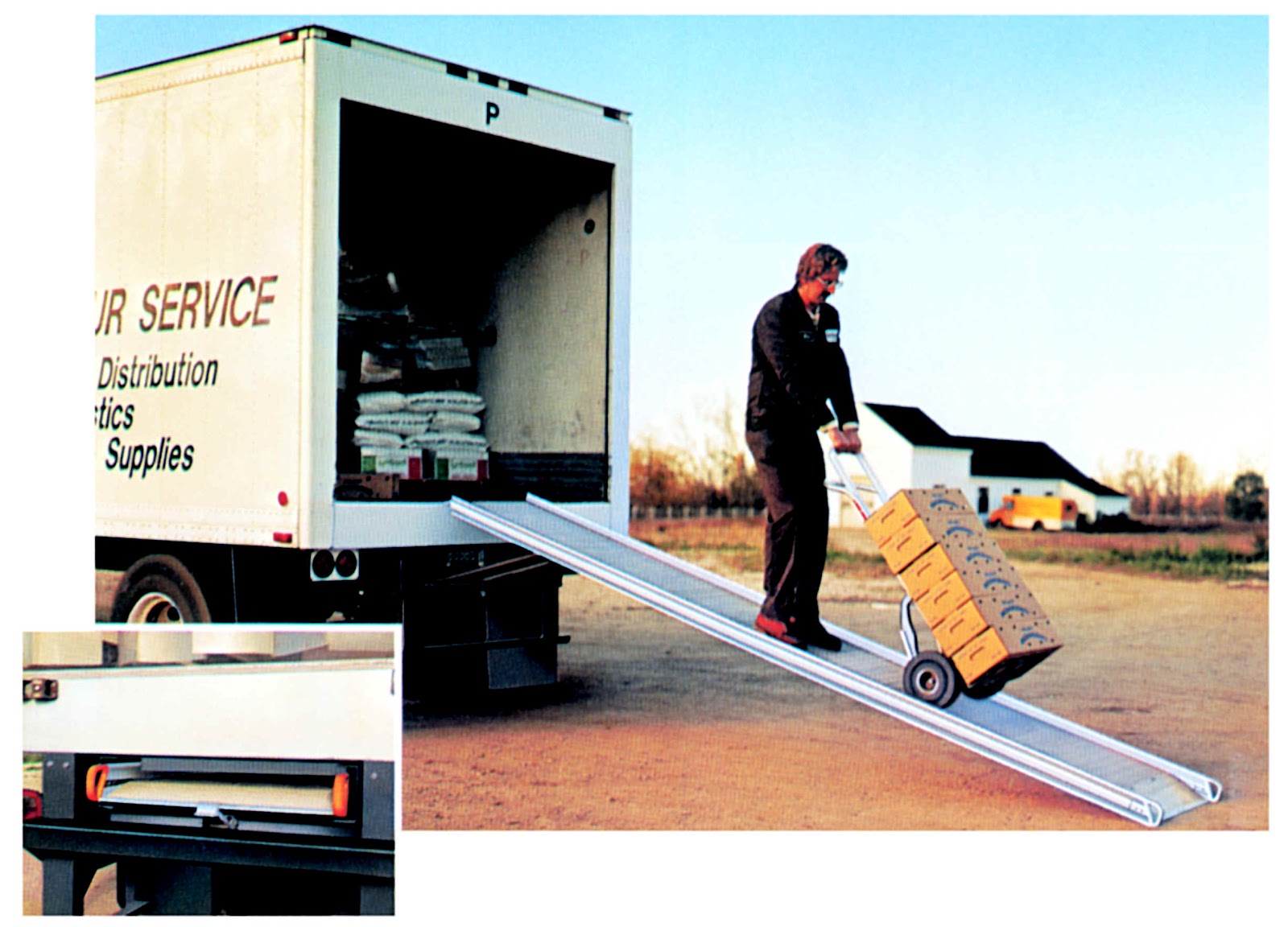
Truck Ramps: 


This truck ramp us used to pull up and push down heavy objects. The ramp allows these people to perform this action with less force, but not less work. Work is a constant and will stay the same. The ramp uses less force but requires more distance. If they were not to use a ramp, the force will increase and the distance will decrease. 


Sunday, September 9, 2012

Simple Machines: They Make Life Easier

 ~ For this week's lab we studied simple machines. In class, we built a pulley, and tt may have looked easy at first, but it was more complicated than we thought. Using the pulley, we attached the electronic force probe to one end and a 0.2 kilogram brass object to the other and pulled. We did this many times adjusting the speed we pulled at, the length of string we used, and trying to adjust the amount of force we used. One of the goals was to use only 0.5 N of force to lift up the brass object 10 centimeters. It took quite a lot of tries to achieve it, but we were able to do it.


              Trade-Off
 ~ With simple machines, we have found ways to use less force in our everyday lives. BUT, there is always that trade-off. Force and distance are inversely proportional meaning that when force goes up, distance goes down and vice versa. Without a pulley, it took 2 N to lift up the 0.2 kg brass object 10 cm. With the pulley, it took about 1 N to lift up the 0.2 kg brass object 10 centimeters. But we had to increase the length of the string to do this and it was 20 centimeters. We can see that the distance doubled. So we can see "that you really can't have something for nothing."


BIG QUESTIONS:
1. How can force be manipulated using a simple machine?
2. What do you observe regarding the relationship between force and distance in a simple machine? 
          

         -Using a simple machine, we can decrease the amount of force we use. But there is always a trade off. To use less force, you must increase the distance you use. This is shown with the data that we came up with. 

Without pulley: 2 N and 10 cm to lift it up 10 cm
With pulley: 1 N and 20 cm to lift it up 10 cm

The equation we got is A=fd.


       Elevators and Pulleys


This link shows us how many people use a simple machine everyday: the pulley for an elevator. 


Sunday, September 2, 2012

Mass and Force: How do they relate?

 ~ Last week, we performed a lab that showed how the force needed to lift an object was affected by its mass. Using both the spring-gauge and the electronic force probe, we hung brass objects of different masses on the hooks of both tools. The benefit of using two measuring devices is that you can make sure that the measurement is accurate. The spring-gauge is a good tool to use, but the electronic force probe allows us to get more accurate measurements. With the data that was found, we noticed that more mass means more force needed. We recorded our data then we used a whiteboard to create a graph:


 ~ This graph not only shows the data; it gives us important information such as the equation relating mass to force. Using two points on the graph, we found the slope of the line: 10.1. With the equation of the line y=mx+b, we substituted f (force) for y, 10 (slope) for m, and m (mass) for x to come up with the equation f=10m. 10 Newtons/kilogram has been determined to be the gravitational constant (g) on Earth. The equation then becomes f=mg. 


With this lab, I learned that more force is needed on an object with more mass. I also learned how to find an equation using the graph by substituting for x and y and finding the slope of the line. Finding the slope, we came up with the gravitational constant on Earth which is 10 Newtons/kilogram. The gravitational constant on other planets and moons may not be the same however. Our weight on different planets may differ than our weight on Earth, but our mass will always stay the same regardless of where you are. I learned that mass does not change because it is the amount of matter in an object. That amount does not change based on location and is not affected by gravity. 

          ~Tennis Ball vs. Medicine Ball


 ~ As you can see, tennis balls are much easier to lift than the medicine ball. The tennis balls are light and most likely have less mass than the medicine ball. There is not much effort into picking up a tennis ball and you can pick many tennis balls at a time. The medicine ball, however, requires much more effort. The man in the second picture is having a tough time picking it up. He is putting a lot of force into picking up the medicine ball that has more mass than the tennis ball. The kids are using force to pick up the tennis balls but not as much as the man because the tennis balls have less mass. These two pictures demonstrate how the amount of force needed is affected by the amount of mass.